Lymphatic Drainage Massage

Lymphatic Drainage Massage
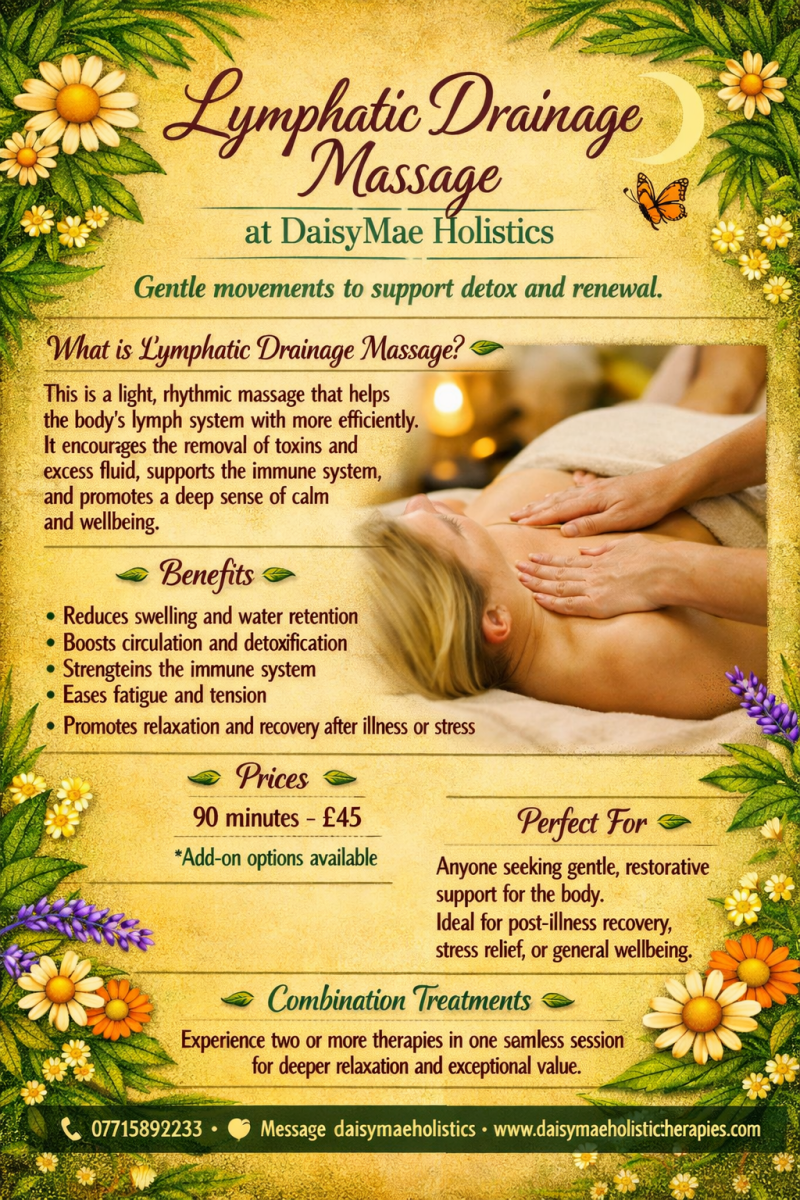
Lymphatic drainage massage is a gentle, therapeutic technique designed to stimulate the lymphatic system, promoting the natural drainage of lymph fluid.
This type of massage helps to reduce swelling and improve circulation, making it particularly beneficial for individuals recovering from surgery, those with lymphedema, or anyone seeking to enhance their overall wellness.
During a lymphatic drainage session, a trained therapist uses light pressure and rhythmic, circular movements to encourage the flow of lymph, which carries waste products and toxins away from the tissues.
This massage not only aids in detoxification but can also boost the immune system, relieve stress, and promote relaxation.
Many people find it a soothing experience, often describing it as deeply calming. If you're considering lymphatic drainage massage, it's essential to consult with a qualified practitioner to ensure it's appropriate for your specific health needs.

Duration of a Lymphatic Drainage Massage Session
A session of lymphatic drainage massage typically lasts between 60 to 90 minutes. This duration allows me to effectively stimulate the lymphatic system, promoting better circulation and detoxification.
i also offer shorter sessions, around 30 to 45 minutes, especially for targeted areas.
However, for a comprehensive treatment that covers the entire body, a longer session is generally recommended.

MORE ABOUT LYMPHATIC DRAINAGE MASSAGE ( MLD )
Introduction to lymphatic drainage massage
Lymphatic drainage massage (often called manual lymphatic drainage, MLD) is a gentle, highly specialized technique designed to stimulate the flow of lymph—a clear fluid that carries immune cells, removes waste products, and helps maintain fluid balance in the body. Unlike blood, which is pumped by the heart, lymph relies on muscle movement, breathing, and the intrinsic contractions of lymph vessels to move. When this system is sluggish, damaged, or overloaded, fluid can accumulate and cause swelling, discomfort, and impaired immune function.
The lymphatic system: a brief overview
Structure: The lymphatic system is made up of lymph vessels, lymph nodes, and lymphoid organs (such as the spleen and thymus). Lymph vessels run parallel to blood vessels and collect excess fluid from tissues, returning it to the bloodstream.
Lymph nodes: These small, bean-shaped structures filter lymph, trapping bacteria, viruses, and cellular debris. Immune cells within the nodes then neutralize or destroy these particles.
Function: The system plays three key roles:
Fluid balance: returning excess interstitial fluid to circulation
Immune defence: transporting and activating immune cells
Fat absorption: via specialized lymph vessels in the intestines
When lymph flow is impaired—due to surgery, trauma, infection, or congenital issues—lymphedema (persistent swelling) can develop, often in the arms, legs, or trunk.
What lymphatic drainage massage is (and is not)
Gentle, rhythmic technique: Lymphatic drainage uses light, slow, rhythmic, skin-stretching movements, not deep pressure. The aim is to stimulate superficial lymph vessels just under the skin, encouraging lymph to move toward functioning lymph nodes and drainage pathways.
Medical vs. “detox” trend: In clinical practice, MLD is most clearly supported for lymphedema management and certain post‑operative recovery plans. It is not a cure‑all for weight loss, general “detox,” or chronic disease, and should not be marketed as such.
Part of a broader therapy plan: For conditions like lymphedema, MLD is usually combined with compression garments or bandaging, exercise, and skin care—a package often called complete decongestive therapy (CDT).
How lymphatic drainage massage is performed
General principles
Pressure: Touch is very light—just enough to gently stretch the skin without engaging deeper muscles. Too much pressure can collapse delicate lymph vessels and reduce effectiveness.
Direction: Movements follow the natural lymph pathways, always guiding fluid toward major lymph node groups (neck, armpits, groin, abdomen).
Rhythm and repetition: Strokes are slow, repetitive, and rhythmic, helping the vessels’ own contractions synchronize and encouraging steady flow.
Order: A key principle is to “clear proximally, then drain distally.” In practice, this means:
-
First, open and stimulate lymph nodes and vessels closest to the central circulation (e.g., neck, trunk).
-
Then, work on more distal areas (e.g., arms, legs), so fluid has somewhere to go.
Typical professional MLD session
A trained therapist (often with specific certification in MLD) will usually:
-
Assessment:
Review medical history, surgeries, injuries, and any swelling patterns. - Check for contraindications (e.g., infection, blood clots, uncontrolled heart failure).
-
Opening central areas:
Gentle strokes on the neck and supraclavicular fossae (above the collarbones) to stimulate the main lymphatic ducts. - Light circular or pumping movements over the thoracic area and sometimes the abdomen.
-
Clearing regional nodes:
Soft, rhythmic strokes over axillary (armpit) nodes for upper‑body work. - Similar techniques over inguinal (groin) nodes for lower‑body drainage.
-
Working the affected limb or region:
Starting closer to the trunk, the therapist uses skin‑stretching, circular, or spiral strokes that move fluid toward the previously “opened” nodes. - Gradually moves further down the limb (e.g., upper arm → forearm → hand) or area (e.g., thigh → calf → foot).
-
Finishing and integration:
Re‑stimulate central areas to encourage final drainage. - Followed by gentle exercises, and self‑care instructions.
Simple self‑massage techniques
Under guidance from a professional, clients may learn simple lymphatic drainage to support daily management:
Light strokes only: feathery, skin‑level movements
Short sessions: often 10–20 minutes, focusing on specific areas
Sequence: always begin near central nodes (neck, armpits, groin) before working further out
Breathing: slow, diaphragmatic breathing can enhance lymph flow
Self‑massage should never replace professional care in complex cases (e.g., cancer‑related lymphedema), but it can be a helpful adjunct when taught correctly.
Benefits of lymphatic drainage massage
1. Reduction of lymphedema and swelling
The most established benefit is reducing swelling caused by lymphatic system dysfunction, especially after cancer treatments involving lymph node removal (e.g., breast cancer surgery). MLD helps move fluid out of congested tissues, easing heaviness, tightness, and discomfort.
2. Support for immune function
Because lymph carries immune cells and waste products to lymph nodes for processing, improving lymph flow can support the body’s natural immune surveillance and waste removal. While research is still evolving, MLD may help the immune system work more efficiently by promoting lymph circulation and pathogen clearance.
3. Pain and stiffness relief
Studies suggest MLD can reduce pain, stiffness, and discomfort associated with:
Lymphedema
Certain autoimmune conditions (e.g., rheumatoid arthritis)
Fibromyalgia
Post‑surgical recovery
General muscle tension
By reducing swelling, improving microcirculation, and calming the nervous system, clients often report a sense of lightness, reduced pressure, and improved mobility.
4. Post‑operative recovery support
In some rehabilitation plans, surgeons or physiotherapists may recommend MLD to:
Help manage post‑surgical swelling
Support tissue healing
Improve comfort and range of motion
This is always done under medical guidance, with careful timing relative to the surgery.
5. General wellbeing and relaxation
Even outside strict medical indications, many people experience:
Deep relaxation due to the slow, gentle nature of the touch
A feeling of lightness and clarity as swelling and stagnation ease
Enhanced body awareness and connection
However, it’s important to be honest: while these wellbeing effects are real, MLD should not be marketed as a miracle “detox” or weight‑loss solution.
Who may benefit most
Lymphatic drainage massage can be particularly helpful for:
People with lymphedema (primary or secondary)
Those recovering from cancer treatments involving lymph node removal
Individuals with chronic swelling in limbs or face due to vascular or lymphatic issues
Selected post‑operative patients, when recommended by their healthcare team
Some people with fibromyalgia or chronic pain, as part of a broader management plan
Contraindications and safety considerations
Despite its gentle nature, MLD is not suitable for everyone. People should seek medical advice before treatment if they have:
-
Acute infection or inflammation (e.g., cellulitis)
-
Untreated blood clots (deep vein thrombosis)
-
Uncontrolled heart failure or severe cardiovascular disease
-
Active cancer where lymph stimulation may be contraindicated (this is nuanced and must be guided by oncology/medical advice)
-
Severe kidney or liver disease where fluid shifts could be problematic
In these cases, stimulating lymph flow could potentially worsen symptoms or interfere with medical management. A thorough assessment and collaboration with healthcare providers is essential.
Closing thoughts
Lymphatic drainage massage is a subtle but powerful technique: it doesn’t rely on force, but on precision, rhythm, and respect for the body’s own fluid‑balance and immune systems. When practiced correctly and integrated into a thoughtful care plan, it can ease swelling, support healing, reduce pain, and offer a profound sense of calm and lightness.